
Crawl Space Mold Removal: Causes, Health Risks, & Effective Solutions
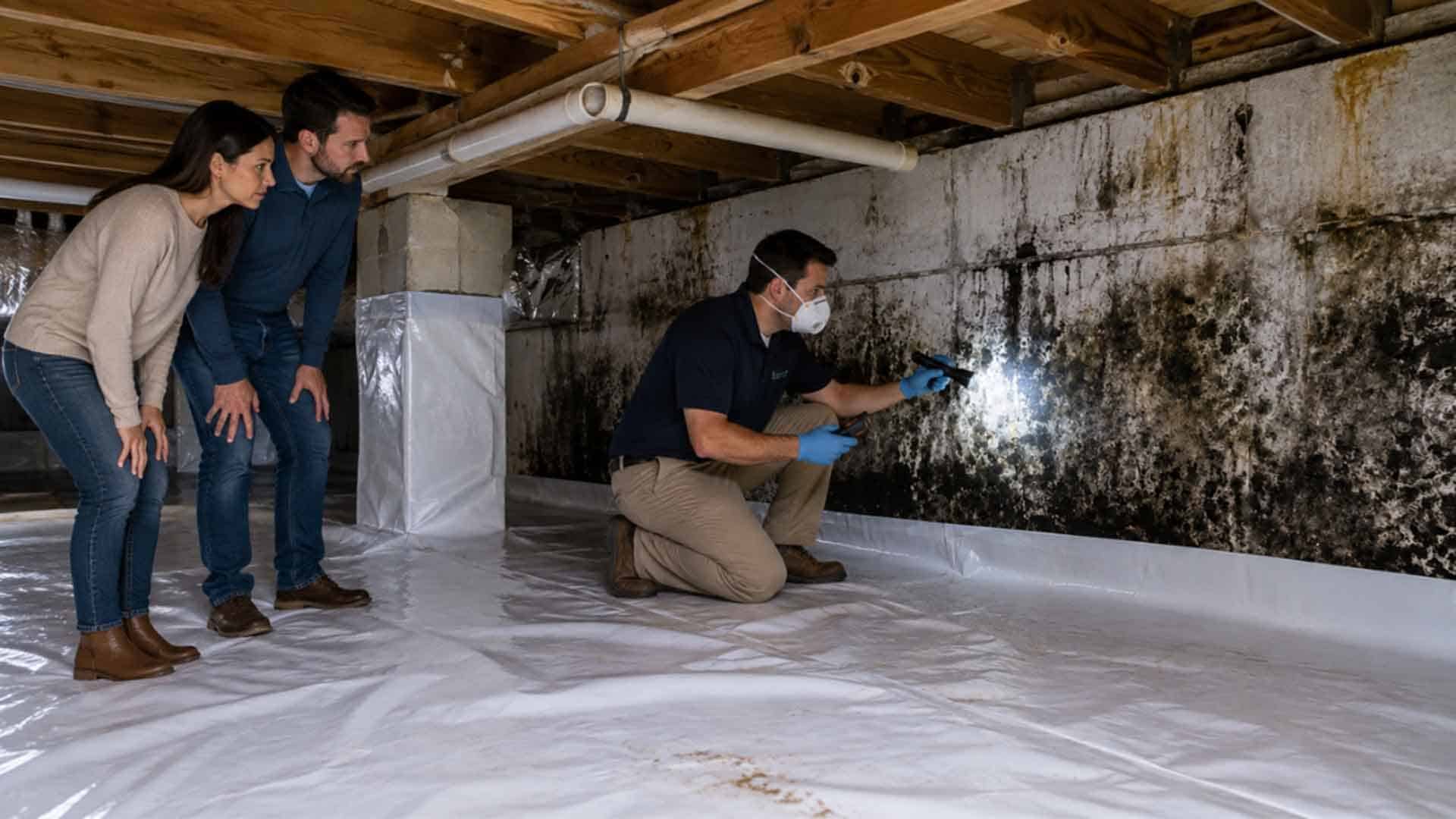
A damp crawl space can become a perfect place for mold to grow. Leaks, poor drainage, and trapped moisture are some of the most common causes.
Because crawl spaces are hidden, mold may spread before you notice it. It can create musty odors, damage wood and insulation, and affect the air inside your home.
In this blog, we explain what causes crawl space mold, the risks it may create, and the best ways to approach mold removal, remove existing mold, and keep it from coming back.
|
Need Professional Mold Removal? Contact Our Experts Today! |
What Causes Mold to Grow in a Crawl Space?
Mold spores are naturally present in the environment. They become a problem when they land on a damp surface with something organic to feed on, such as wood, dust, paper-backed insulation, or construction debris.
Common Causes of Mold Growth
- Plumbing leaks in the house
- Water entering through foundation cracks
- Poor yard grading that directs rainwater toward the house
- Damaged or clogged gutters and downspouts
- Damp soil without an effective vapor barrier
- Condensation on pipes, ducts, or wooden surfaces
- Flooding or previous water damage
- Wet or fallen insulation
- Poor airflow or an improperly designed ventilation system
- High humidity that stays trapped in the crawl space
A plumbing leak may be easy to identify. Ground moisture and condensation can be harder to notice because they do not always leave a puddle. Instead, you may see water droplets on pipes, damp joists, rusted metal, or white and dark growth on the wood.
The important point is simple: mold is a moisture problem first. Removing visible mold without controlling the water source gives it a chance to return.
Can Crawl Space Mold Affect Your Health?
Mold does not affect everyone in the same way. Some people may notice no immediate reaction, while others may experience symptoms after spending time in a damp or mold-affected building.
The U.S. Environmental Protection Agency explains that mold can produce allergens and irritants. Exposure may cause allergic reactions in sensitive individuals, especially through inhalation or direct contact.
Possible symptoms may include:
- Sneezing
- Runny or blocked nose
- Itchy or watery eyes
- Coughing
- Throat irritation
- Wheezing
- Skin irritation
- Worsening asthma symptoms
Children, older adults, people with asthma, individuals with mold allergies, and those with weakened immune systems may be more sensitive. The CDC advises that people at greater risk of severe effects should not take part in mold cleanup.
These symptoms can have many possible causes, so mold should not be self-diagnosed as the reason for a medical problem. Speak with a qualified medical professional if you have health concerns. At the same time, any confirmed moisture and mold problem in the building should be corrected.
How to Get Rid of Mold in a Crawl Space
The correct solution depends on how much mold is present, what materials are affected, and where the moisture is coming from.
For a very small area on a suitable surface, a homeowner may be able to clean it after repairing the moisture source. The EPA generally suggests that areas smaller than about 10 square feet may sometimes be handled without a professional, provided there has not been major water damage and the person can work safely. Larger or complicated contamination often needs professional attention.
A safe plan should include these steps:
1. Identify the Moisture Source
Look for active leaks, standing water, foundation seepage, damp soil, condensation, damaged gutters, or poor drainage.
Cleaning should not begin until the moisture problem is understood. Otherwise, the crawl space may become contaminated again.
2. Make Sure It Is Safe to Go In
Before entering a crawl space, take a quick look at the conditions. You could be dealing with exposed wires, pests, sewage, damaged supports, or poor ventilation. There may also be asbestos-containing materials or other hazards you cannot easily spot.
If you see standing water near electrical wiring, sewage, heavy mold growth, or signs that the structure is damaged, it is best to stay out and call a professional.
3. Avoid Spreading the Contamination
Do not use an ordinary household fan to dry a moldy area. It may blow spores and contaminated dust into other parts of the crawl space.
Avoid dry brushing, sanding, or tearing out materials without containment. These actions can make particles airborne.
4. Remove Materials That Cannot Be Saved
Some nonporous surfaces may be cleaned. Porous materials that are heavily contaminated or physically damaged may need to be removed and disposed of.
Examples may include:
- Wet fiberglass insulation
- Mold-damaged cardboard
- Paper-backed products
- Severely damaged wood
- Contaminated debris
- Materials affected by sewage
5. Dry the Crawl Space Completely
Once the mold is cleaned up, the crawl space needs to stay dry. Depending on the cause, this may mean fixing a leak, improving drainage, adding a vapor barrier, using a dehumidifier, or repairing foundation issues.
Simply removing or spraying the mold isn't enough. Unless the source of moisture is eliminated, mold can grow back within a short period.
|
Need Long-Term Protection? Schedule Mold Remediation Today! |
When Should You Call a Professional?
Professional help is usually the safer choice in the following situations:
- The affected area is larger than about 10 square feet
- Mold covers several joists or wide sections of subflooring
- Contamination is hidden behind insulation
- The crawl space has standing water
- Sewage or contaminated floodwater is involved
- Mold keeps returning after cleaning
- HVAC ducts or equipment may be affected
- Occupants have asthma, mold allergies, or weakened immune systems
- You cannot identify the source of moisture
- The area contains possible asbestos or lead hazards
- Access is restricted or unsafe
Professional services, including mold remediation can also be helpful when a property is being sold, renovated, or repaired after major water damage because the assessment and remediation process can provide a record of what was found and how it was handled.
Mold Removal vs. Mold Remediation: What's the Difference?
Understanding the difference between mold removal and mold remediation can help you choose the most effective solution for protecting your home and indoor air quality.
|
Mold Removal |
Mold Remediation |
|
Focuses on removing visible mold growth |
Addresses mold growth, affected materials, and spread |
|
May be limited to surface cleaning |
May include containment and air filtration |
|
Does not always correct the moisture source |
Includes identifying conditions that allowed growth |
|
Suitable for some small, isolated areas |
Better for larger, hidden, recurring, or complex problems |
|
May not include removal of damaged materials |
May include controlled removal and disposal |
Complete removal of every mold spore from a building is not realistic. Spores naturally exist indoors and outdoors. The goal of remediation is to return mold levels to a normal condition and correct the moisture that allowed abnormal growth.
How Professional Crawl Space Mold Removal Works
1 .Detailed Inspection
The team inspects the crawl space, checks moisture conditions, identifies affected materials, and looks for possible water sources. They may recommend testing when the type or extent of contamination is unclear, although visible mold does not always require testing before work begins.
2. Containment
Affected sections may be isolated to reduce the movement of dust and spores into clean areas. Entry points, vents, ducts, and pathways may need special protection.
3. Air Filtration
Commercial air-filtration equipment is also used during the work. This helps capture airborne particles released while contaminated materials are cleaned or removed.
4. Controlled Material Removal
Not everything in a moldy crawl space can be saved. If insulation, debris, or other materials are too damaged or contaminated to clean properly, they may need to be taken out. Professionals carefully contain these materials and seal the waste before carrying it out of the home.
5. Surface Cleaning
Once the damaged materials are removed, the remaining surfaces can be cleaned. The right method depends on the material and how much mold is present. Depending on the situation, this may include HEPA vacuuming, damp wiping, specialized cleaning products, or other cleaning methods.
6. Drying and Moisture Correction
Cleaning up the mold is only part of the job. The crawl space also needs to be dried out, and the reason it became damp in the first place needs to be fixed. Depending on the situation, this could mean repairing a plumbing leak, improving drainage, adding a ground vapor barrier, installing a dehumidifier, or sealing foundation cracks.
7. Final Review
The completed area is inspected for remaining visible growth, dust, debris, and moisture. In some situations, an independent post-remediation assessment may also be appropriate.
|
Get Trusted Mold Abatement Solutions for Your Property - Call 866-726-0304 |
Is Mold Removal Enough to Fix a Mold Problem?
No. Mold removal deals with the growth that exists today. It does not automatically fix the condition that caused it. If a pipe continues leaking or damp soil remains uncovered, the crawl space may still support new growth.
Mold can come back when moisture returns. The best prevention plan depends on the actual cause rather than a one-size-fits-all product.
A lasting solution should answer four questions:
- Where did the moisture come from?
- Which materials are contaminated?
- Can those materials be cleaned, or must they be removed?
- What changes will keep the area dry?
Be cautious of any service that promises to solve a large crawl space problem by spraying one chemical without inspecting the source. A surface treatment may be one part of the process, but it cannot repair a leak or remove water-damaged insulation.
Frequently Asked Questions
1. Is white mold in a crawl space dangerous?
White mold growth should be evaluated rather than identified by color alone. Several types of mold can appear white, and some non-mold substances may look similar. If you notice widespread growth, avoid brushing or scraping it yourself. A mold professional can inspect the area, determine the extent of the problem, and recommend the right cleanup and moisture-control steps.
2. Can mold beneath the house make the rooms above smell musty?
Yes. Gaps around pipes, wiring, ductwork, floor vents, and framing can allow odors from the crawl space to move into the living area. A musty smell does not always mean mold is present, but it can be a sign of moisture or damp materials beneath your home.
Scheduling an assessment with a trained professional can help locate hidden damp spots and clear out the odor before it gets worse.
3. How quickly can mold grow after a crawl space leak?
Mold can begin growing within a few days when building materials stay wet, although visible growth may take longer to notice. After a plumbing leak or flooding, it is important to dry the area as soon as possible. A professional can also check for moisture inside wood and insulation that may feel dry on the surface.
4. Is crawl space mold common around Sacramento Valley?
It can occur in Sacramento valley homes, especially after winter rain, plumbing leaks, drainage problems, irrigation overspray, or long periods of damp soil beneath the house. Hot weather does not guarantee that a crawl space will stay dry. Condensation and trapped ground moisture can continue even when outdoor conditions feel warm. A local mold remediation professional in Sacramento can evaluate conditions common to area homes.
Takeaway
If you notice a musty smell or see mold in your crawl space, do not ignore it. The sooner you address the problem, the easier it may be to prevent further damage. If the mold is widespread or keeps coming back, it is best to have a professional take a closer look.
Read More About:
- Basement Mold Control: Expert Tips on Removal and Prevention
- Mold Removal Made Simple: Concrete Floors, Walls & Patios
- What Is White Mold and Is It Dangerous?
- Discovered Orange Mold? Learn Causes, Risks & How to Prevent It
Protect Your Property With Professional Mold Remediation by JM Environmental Inc.
Mold in your crawl space can be difficult to handle on your own. JM Environmental, Inc. can help identify the problem and provide the right mold remediation solution.
With over 30 years of experience, we have been successfully handling complex environmental cleanup and hazardous-material projects using professional equipment, protective measures, and established work protocols. We’re a fully licensed team, so your property is in safe hands.
As a BBB-accredited company with an A+ rating, we proudly provide services for mold remediation in Sacramento, asbestos abatement, lead removal, demolition, biohazard remediation, and fire-debris cleanup.
Whether you need mold removal, mold remediation, or mold abatement in Sacramento, JM Environmental, Inc. can inspect the affected area, develop an appropriate work plan, remove contaminated materials, and help prepare the property for necessary repairs.
Call us at 866-726-0304 to discuss professional crawl space mold removal and remediation.